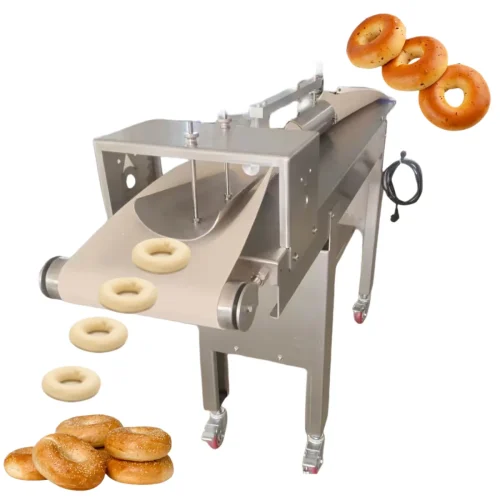
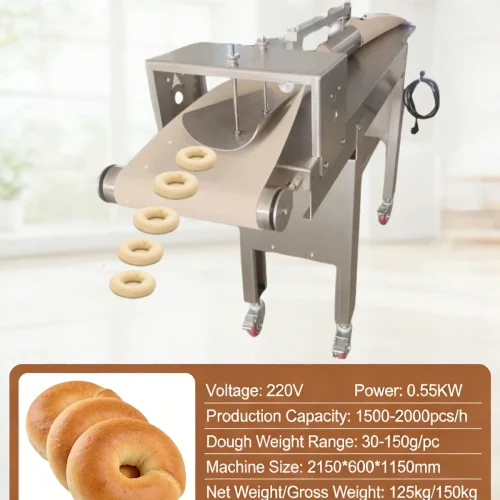
R&M’s bagel making machine is a commercial bagel shaper built for high-volume ring-bread production — American-style thin-crust bagels, café bagel programs, and wholesale supply. This bagel forming machine runs 1,500–2,000 pieces per hour in the 30–150g dough weight range. At 2,150mm long with a 0.55KW motor and 125kg frame, it operates standalone or slots into a full bagel production line alongside a bagel dough mixer, dough divider, proofer, and bakery oven.
Specifications
| Parameter |
Value |
| Machine size |
2,150 × 600 × 1,150mm |
| Dough weight range |
30–150g per piece |
| Output capacity |
1,500–2,000 pieces/hour |
| Power |
0.55 KW |
| Net weight |
125 kg |
| Voltage |
220V/50Hz |
Contact us for wholesale pricing and production line configuration.
What This Bagel Machine Is Built For
A commercial bagel requires two things that differ from most other bread shapes: a round ring form and a dense, tight crumb. Hand-forming bagels at production scale — rolling each piece, forming a ring, sealing the join — takes significant operator time and produces inconsistency in ring diameter and join quality that shows up after baking.
The R&M bagel making machine automates both the forming and ring-joining steps. This bagel rolling machine takes pre-divided dough pieces loaded at the inlet, shapes them into a consistent ring form, and outputs finished pieces ready for the kettle boiling step (for traditional bagels) or direct proofing (for non-boiled styles). As a commercial bagel maker designed for food service and wholesale, it removes the manual bottleneck without requiring skilled operators.
1,500–2,000 pieces per hour: At 30–150g per piece, the output rate of this bagel shaping machine covers the production volumes of a café chain central kitchen, a hotel breakfast bread program, or a wholesale bagel supplier. A single operator loading the machine maintains the output rate — the bottleneck shifts from forming speed to the upstream dividing and proofing steps.
Dough Weight Range — Covering the Full Bagel Size Spectrum
Mini Bagels (30–80g)
Mini bagels for breakfast buffet service, children’s bakery formats, and appetizer-size bagels. Mini bagels are a growing format in hotel buffet and catering supply — consistent size matters for presentation and portion control.
Standard American-Style Bagels (80–120g)
Standard American-style thin-crust bagel. The most common commercial bagel weight in Western markets. At 100g, a standard sesame or poppy seed bagel produces the expected palm-size format.
Large Deli-Style Bagels (120–150g)
Larger bagels for deli-style sandwich formats. A 130–150g bagel produces a split-and-fill surface area closer to a full sandwich roll. Popular in café brunch menus and deli supply.
The machine’s 30–150g range covers all three of these commercial formats without adjustment — the piece weight coming in from the divider determines the output size.
Bagel Equipment — What Comes Before and After This Machine
This bagel forming machine handles the shaping step at the center of a complete bagel production line. Understanding the full workflow helps buyers plan their bagel equipment setup:
1. Dough Mixing — Bagel Dough Mixer
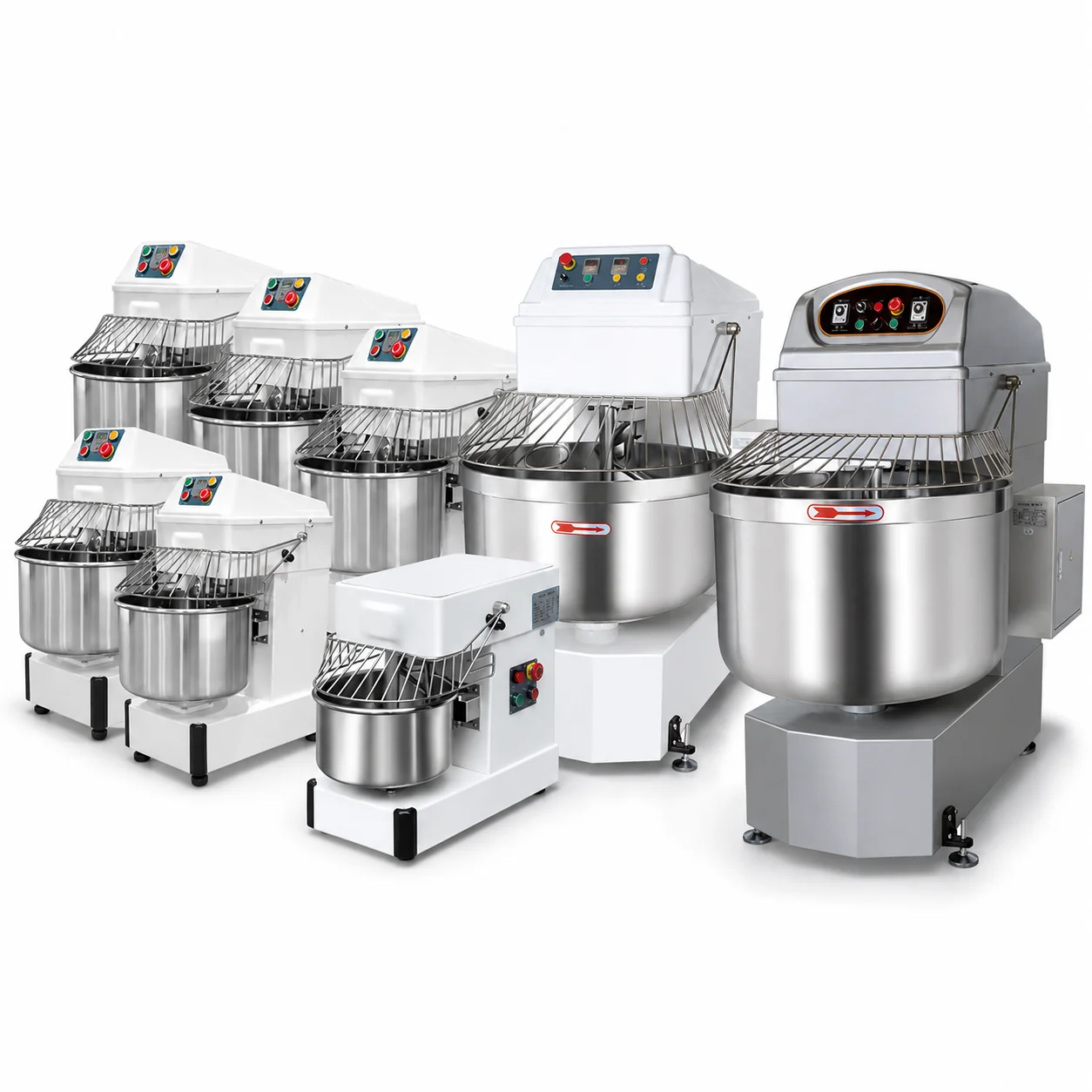
A spiral dough mixer develops the tight, low-hydration dough that gives bagels their dense, chewy texture. R&M supplies commercial spiral mixers matched to your batch size.
2. Dividing — Bagel Dough Divider
A dough divider portions the mixed dough into pieces at your target weight (30–150g per piece). Consistent division weight is what produces consistent bagel diameter downstream. R&M
dough divider rounders are a natural pairing with this machine.
3. Bench Rest
Divided pieces rest briefly at room temperature to relax the gluten before the forming step — typically 5–15 minutes.
4. Bagel Forming — This Bagel Machine
Pre-divided pieces load into the bagel former and exit as shaped rings. This is the step this machine handles.
5. Proofing — Bagel Proofer
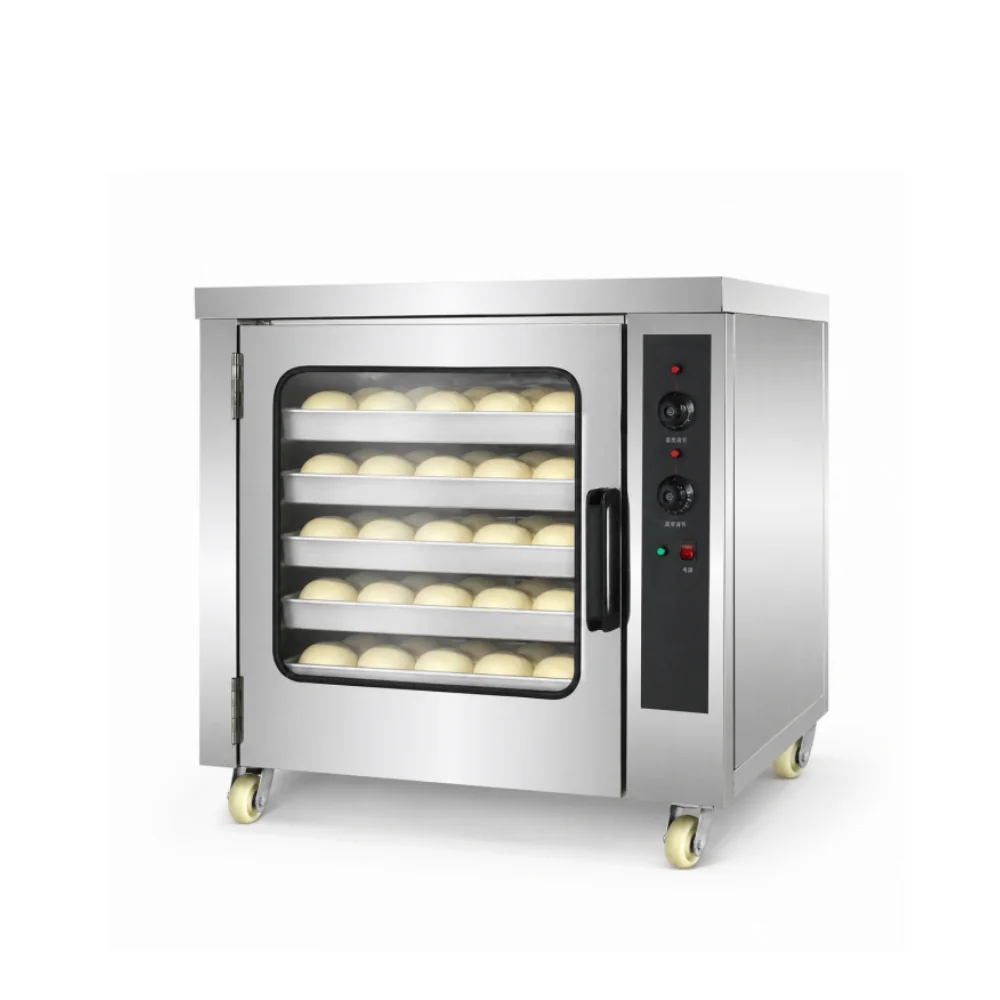
Formed rings go into a dough proofer for final fermentation. Proofing time and temperature directly affect the finished bagel’s chew, crust, and internal structure.
6. Boiling and Baking
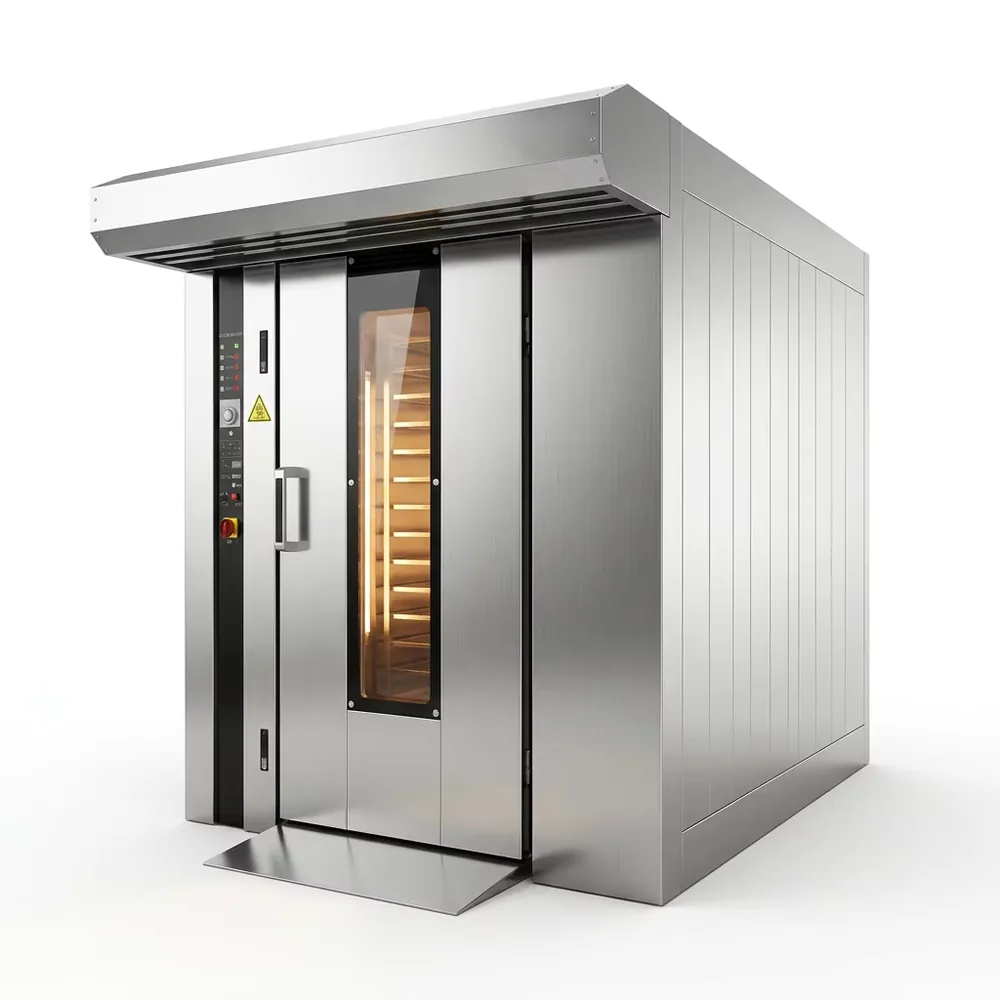
Traditional bagels are briefly boiled in a kettle before baking — this sets the crust. Non-boiled commercial bagels go directly from proofer to oven.
R&M supplies most of this bagel production equipment. Contact us to discuss a full line configuration matched to your daily output target and facility layout.
Standalone or Line Integration
Standalone Operation
For a café or small bakery producing bagels once or twice per week, the bagel maker machine operates as a standalone station. An operator hand-scales or uses a simple divider to produce pieces, loads them into the machine, and collects shaped rings on a proofing tray. This is also the typical setup for operators evaluating the machine before committing to a full bagel equipment line. For lower-volume bagel programs, R&M’s
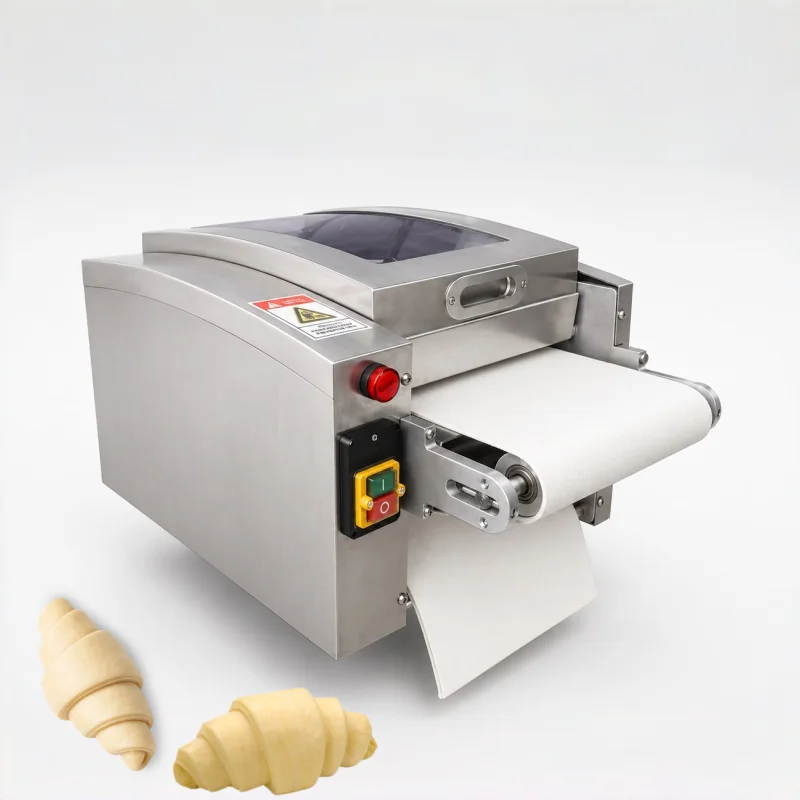
bread dough moulder machine is a compact alternative worth comparing.
Integrated Line
For a central kitchen producing 5,000–15,000 bagels per week, the bagel making machine integrates into a sequential production line with upstream bagel dough divider and downstream proofing cabinet. At 1,500–2,000 pieces per hour, the bagel former does not create a bottleneck in most medium-scale lines. Commercial bagel making equipment buyers planning a full setup should contact us for a matched line recommendation.
Applications
Café and Coffee Shop Chains
Bagels have become a standard café menu item in many markets. A chain operating multiple outlets needs consistent bagel sizing — the same diameter, the same hole size, the same surface area for toppings. This bagel making machine produces that consistency across batches that hand-forming cannot match at speed. For café chains setting up or expanding a bagel program, this is the commercial bagel equipment purchase that anchors the operation.
Western-Style Bakeries in Non-Traditional Markets
Bagel production is expanding in Southeast Asia, the Middle East, and Africa as Western café formats grow. For a bakery establishing a bagel program in a market where skilled bagel hand-formers are rare, the bagel former replaces the need for that specialist skill — any trained operator can run it.
Hotel Breakfast Bread Production
Hotels producing a daily breakfast bread program often include bagels alongside croissants and toast. The machine’s 125kg compact frame fits into a central kitchen without requiring significant floor space, and the 220V supply is compatible with standard commercial kitchen infrastructure. It qualifies as industrial bagel maker equipment for hotel-scale output without requiring factory-grade installation.
Wholesale Bagel Supply and Bagel Shop Setup
Wholesale bakeries supplying supermarkets, delicatessens, or food service distributors need daily volume and consistent visual quality. The 1,500–2,000 pieces per hour rate covers the requirements of most medium-scale wholesale supply contracts. For a new bagel shop, this machine is the core forming piece of a complete bagel shop equipment package.
Frequently Asked Questions
Get a Quote for This Bagel Making Machine
This commercial bagel making machine forms, shapes, and rolls in one pass — 1,500–2,000 pieces per hour, standalone or as part of a full bagel production line. Send us your required output and facility details for factory-direct pricing.








 sales13@rmachinery.com